Microscope inspection and electrical diagnosis
Magnification helps reveal damaged connectors, corrosion and solder-joint problems. A bench power supply and meter then help trace the affected circuit rather than replacing parts on a guess.
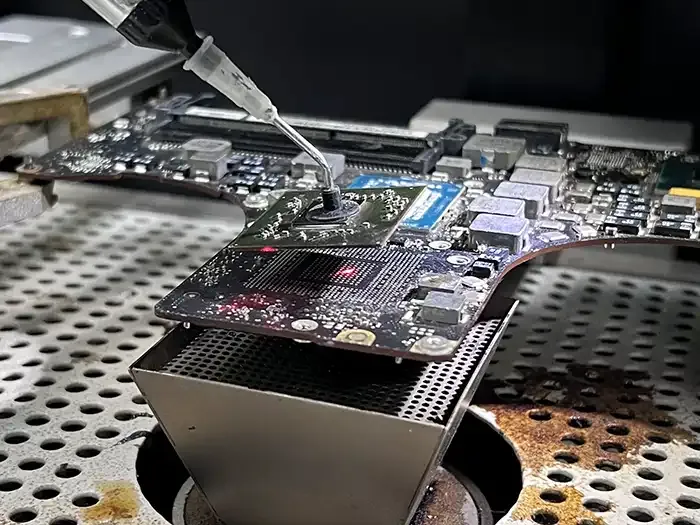
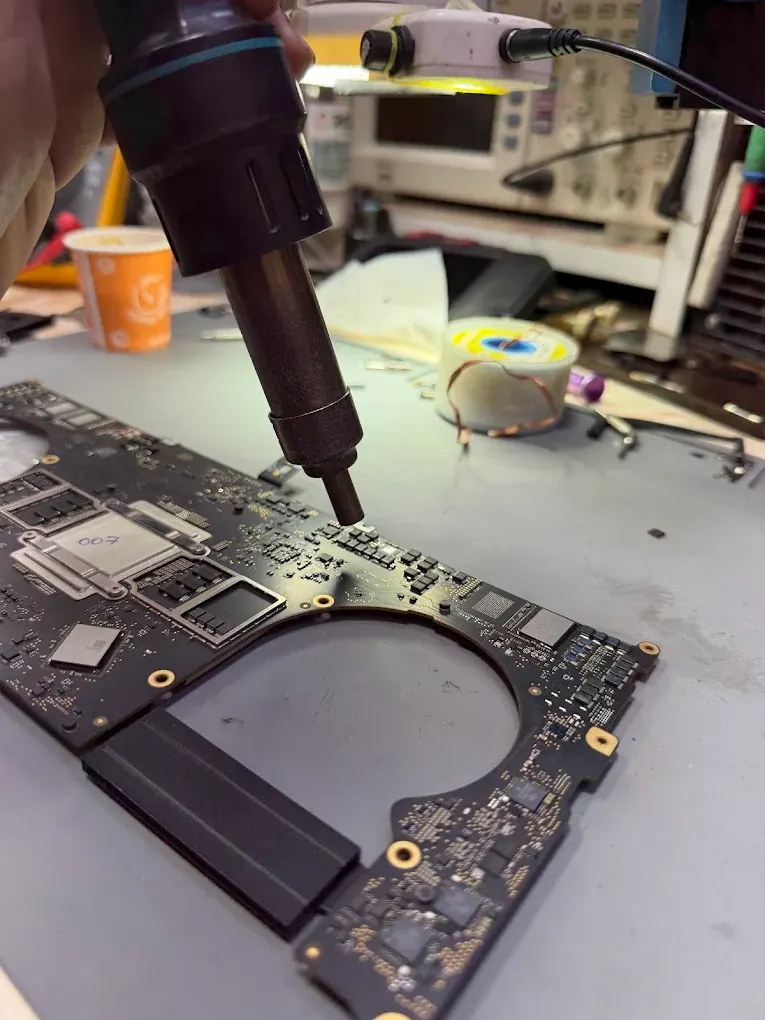
Controlled soldering and hot-air rework
The repair method depends on the component and the board around it. Controlled heating and careful handling let us remove damaged parts, prepare the pads and fit replacements.
The area is inspected again after rework, then checked electrically before the device is assembled.
Cleaning liquid-damaged boards
Liquid can leave deposits beneath connectors and shields. Affected boards are assessed for cleaning and corrosion repair, then dried and tested. Cleaning alone does not establish that a board is repaired.
We explain any continuing reliability concerns before you approve the work.
Testing the fault that brought you in
Checks are chosen for the repair: charging behaviour, startup, display operation, ports or stability under load. We also record any unrelated issues found during diagnosis so you know what was and was not repaired.
From a measured fault to a checked repair
A bench measurement answers a specific question: whether power reaches a circuit, a connector is damaged or a component needs further investigation. The repair follows those findings.
Once the board is reassembled, the original symptom is tested again. Depending on the job, that can mean checking charging, display operation, ports or stability. Ask us to explain the checks relevant to your repair at handover.
- Inspect the affected area and connected parts.
- Measure the circuit before choosing the repair.
- Check the repaired area before reassembly.
- Test the functions included in the approved work.